Anterior Cervical Discectomy and Fusion ( ACDF )

Cervial Spine Surgery

How do I know if I’m a candidate for cervical spine surgery?

You may be a candidate for cervical spine surgery if:

  • Other treatments aren’t helping.
  • Symptoms involving your spine, arms and/or legs are worsening.
  • You’re healthy enough to have surgery.

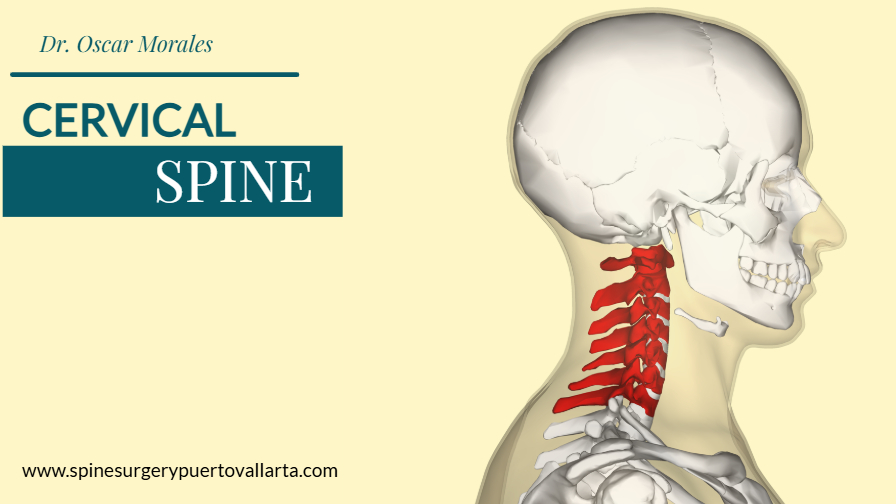
Surgery in the cervical spine may be recommended to treat problems in the neck, such as misalignment, compressed nerves, and/or spinal cord abnormalities.

The most common reasons for cervical spine surgery are to:

Remove parts of the bone or disc that are causing nerve pain

Fuse adjacent vertebrae together to create stability

Relieve pressure on nerves, spinal cord, or both.

Widen the spinal canal to relieve spinal cord compression

Remove tumors
or masses

Stabilize the spine after a traumatic injury.

 
The most common type of neck surgery is ACDF, which is the Acronym for Anterior Cervical Discectomy and fusion.  The C5-C6 and C6-C7 spinal motion segments are common levels in the neck to require surgical intervention.
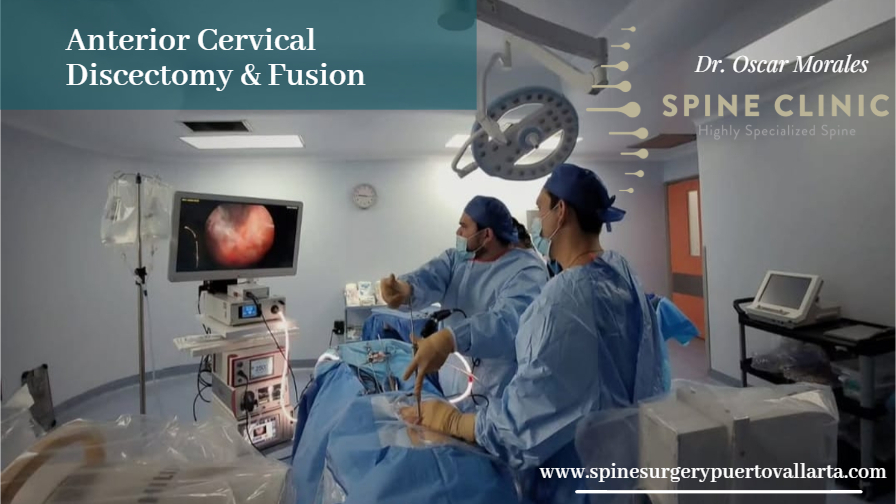
Anterior cervical discectomy and fusion (ACDF) is a type of neck surgery that involves removing a damaged disc to relieve spinal cord or nerve root pressure and alleviate corresponding pain, weakness, numbness, and tingling. A discectomy is a form of surgical decompression, so the procedure may also be called an anterior cervical decompression
While this surgery is most commonly done to treat a symptomatic cervical herniated disc, it may also be done for cervical degenerative disc disease.
 
It is also commonly done to remove bone spurs in the neck (osteophytes) caused by arthritis and to alleviate the symptoms associated with cervical spinal stenosis.

ACDF may be done for one level, or for more than one level, of the cervical spine.
en_US
Scroll to Top