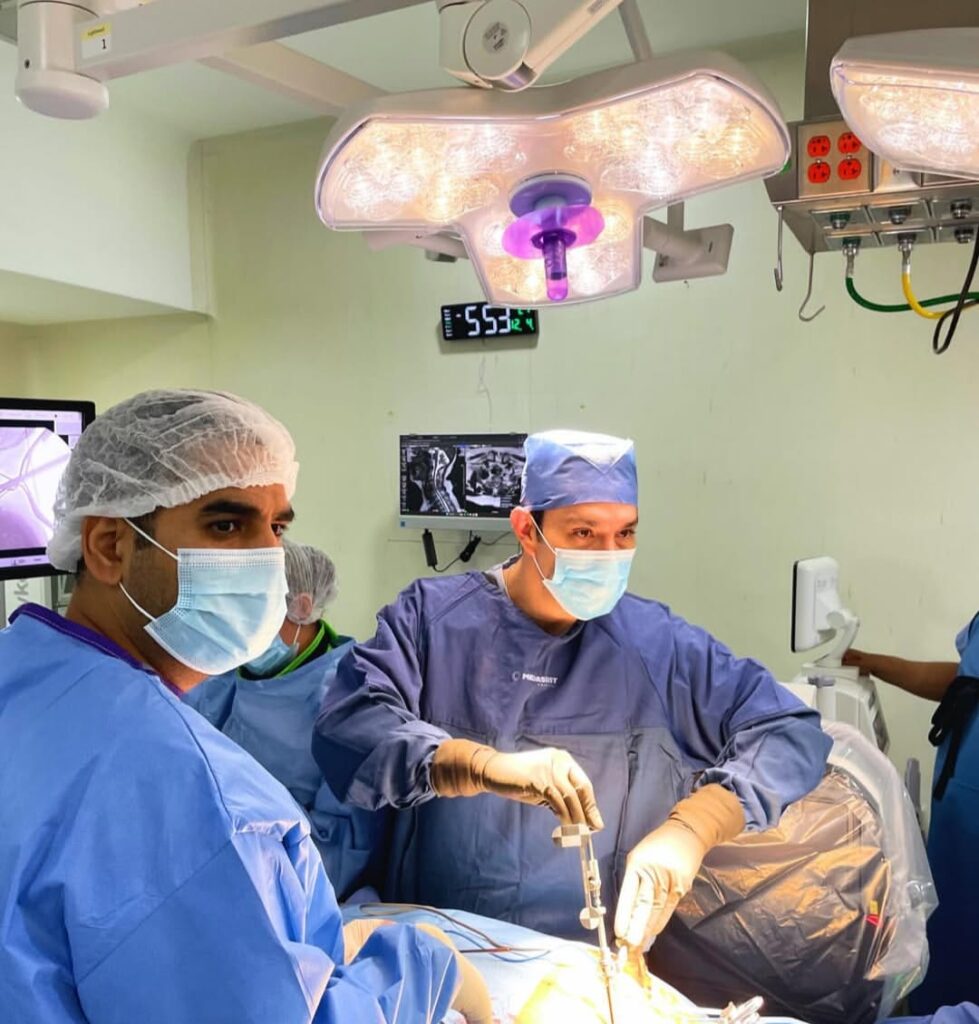
Lumbar decompression is performed to relieve pressure on the spinal cord or nerve roots caused by structural problems in the spine. The most common versions are laminectomy, which removes part or all of the lamina to open up the spinal canal, and microdiscectomy, which removes herniated disc material pressing on a nerve.
El objetivo de una cirugía de descompresión suele ser aliviar el dolor causado por el pellizco de la raíz nerviosa.
The spine surgery experts specialize in using the most innovative, minimally invasive techniques to treat pain and return patients to work and the activities of daily living as soon as possible.
When Decompression Surgery is Recommended?
Decompression is typically recommended when nerve compression is the primary problem and the spine itself remains structurally stable. Patients dealing with spinal conditions such as spinal stenosis, herniated discs, or bone spurs often respond well to decompression alone. The goal is straightforward: remove what’s pressing on the nerve and give it room to heal.
It’s recommended when non-surgical treatments haven’t helped. The surgery aims to improve symptoms such as persistent pain and numbness in the legs caused by pressure on the nerves in the spine.
No two spines are the same, and the decision between decompression and fusion depends on a thorough evaluation rather than a single symptom or scan. Dr. Morales will review MRI and CT imaging, assess the degree of instability, consider how long symptoms have persisted, and factor in whether conservative spine treatment has already been attempted and exhausted
Cirugía de Columna Mínimamente Invasiva (CMI). Este tipo de cirugía utiliza incisiones más pequeñas que la cirugía estándar. Esto suele causar menos daño […]
La cirugía para la ciática generalmente se considera cuando el dolor y/o la debilidad en las piernas es persistente o progresivo incluso después de varios […]