
Benefits of Lumbo - Sacral Spine Disc Surgery
Lorem ipsum dolor sit amet, consectetur adipiscing elit. Ut elit tellus, luctus nec ullamcorper mattis, pulvinar dapibus leo.
- Treats lumbar herniated disc, lumbar degenerative disc disease, and even lumbar spinal stenosis
- Provides significant relief from chronic pain, numbness, and weakness in the lower back, legs, and buttocks
- Provides relief from bladder or bowel incontinence
- Alleviates chronic pain and improves function in the lower back, legs, and buttocks.
- Prevents disease progression and reduces medication dependence
- Faster recovery with minimally invasive techniques
- Enhances overall quality of life by restoring mobility and relieving pain.
What is Lumbosacral Spine Disc Surgery?
Lumbosacral Spine Disc Surgery, also known as Lumbar/ Lumbo Sacral Spine Surgery or Lumbar/Lumbo Sacral Disc Surgery, is an operation to address issues of spinal discs in the lower back (lumbar region).
There are different surgical options available to treat lumbar disc problems. These include:
Discectomy, microdiscectomy, laminotomy, laminectomy, spinal fusion, and artificial disc replacement.
A lumbosacral spine disc surgery involves either of the following procedures:
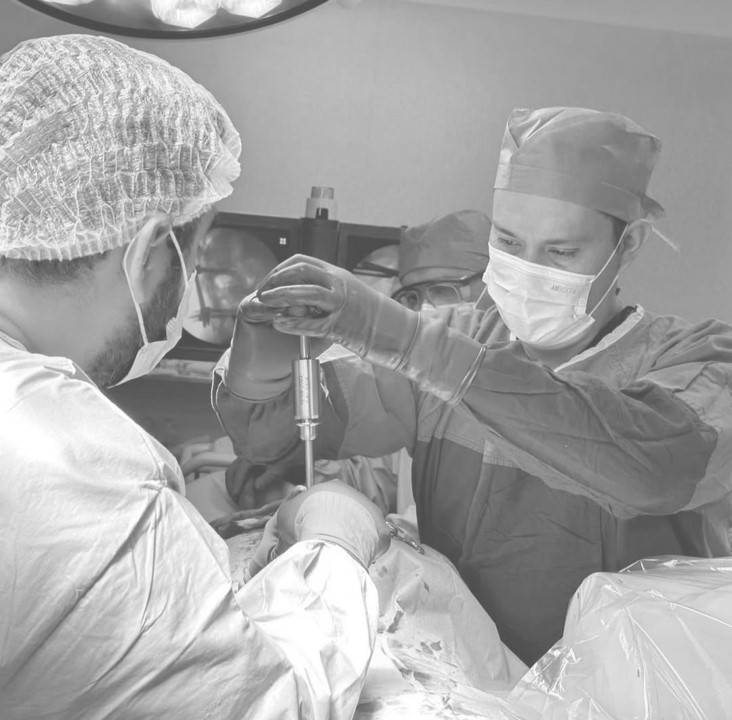
Lumbar Discectomy
This is recommended to cut out the portion of the degenerative or herniated lumbar disc that might be pinching the lumbar spine nerve roots and causing pain. During the surgery, the surgeon exposes the affected lumbar disc from the spine in the posterior (back) of the patient. To get access to the targeted disc, the surgeon needs to split muscles, drill bones, and remove part of the bony lamina that comes in the path- all through skin incisions at the back. Next, the surgeon gently retracts the spinal nerve to one side and then removes one lumbar disc or more, depending upon the particular case.
Laminectomy
It is even referred to as a part of spinal nerve decompression surgery as it helps in relieving pressure off the lumbar spine nerves and spinal cord. This pressure is commonly the result of bone spurs within the spinal canal, usually seen in people having arthritis in their spine. The procedure involves the removal of the lamina to create sufficient space within the spinal canal. Here, the lamina is the back portion of the vertebral bone in the lower back.
Lumbar Spine Fusion Surgery
Lumbar spinal fusion becomes necessary along with lumbar discectomy or other procedures. It is preferred when there is spinal instability often resulting from the removal of a significant amount of lumbar disc material. The procedure involves mending two or more affected vertebrae in the lower back using an autologous bone graft or artificial bone-like material. The vertebrae that are joined together are kept in place with hardware- hooks, plates, rods, cages, or pedicle screws.
Artificial disc replacement
In some cases, replacement of worn or damaged lumbar disc may be done by an artificial lumbar disc/prosthetic instead of fusion of adjacent vertebrae. This is done to maintain motion and flexibility of the spine. Artificial disc replacement is done by making an abdominal incision and moving aside the organs and blood vessels to reach the lumbar spine. Here, nerves are not moved to access the spine.
Microdiscectomy
This type of lumbar disc surgery is similar to the standard lumbar discectomy. The difference is that the surgeon makes a small skin incision and then inserts a series of progressively large dilators to tunnel through the muscles of the back. Special surgical tools called endoscopes are utilised to visualise and operate in a smaller incision area. This surgical technique is a better alternative to an open lumbar discectomy as it causes less damage to back muscles or other surrounding tissues of the lumbar spine, less blood loss, and allows for quick recovery after a short operation.
Laminotomy
This is a variation of the laminectomy procedure. During laminotomy, the surgeon makes only a small hole in the lamina and does not remove the entire lamina.
Good Candidates for Lumbosacral Spine Disc Surgery
Candidates who are best suited for Lumbosacral Spine Disc Surgery are people who have:
Been diagnosed with herniated lumbar disc, lumbar disc degenerative disease, or lumbar spinal stenosis
Intense pain, numbness, or weakness in leg or foot, much worse than back ache
Lower back pain caused by one or two problematic intervertebral lumbar spine discs
No spinal deformity (scoliosis) or weak bone (osteoporosis)
Body size/weight within normal range
Difficulty in standing or walking because of muscle weakness or numbness
Loss of control of bowel or bladder
Significant pain that can’t be relieved with medications or physical therapy
Not undergone any major lumbar spine surgery earlier
No significant disease in facet joints or bony compression on the spinal nerves.

