Sacral Spine.- Common Issues Affecting the Sacral Spine
and Conservative Treatment
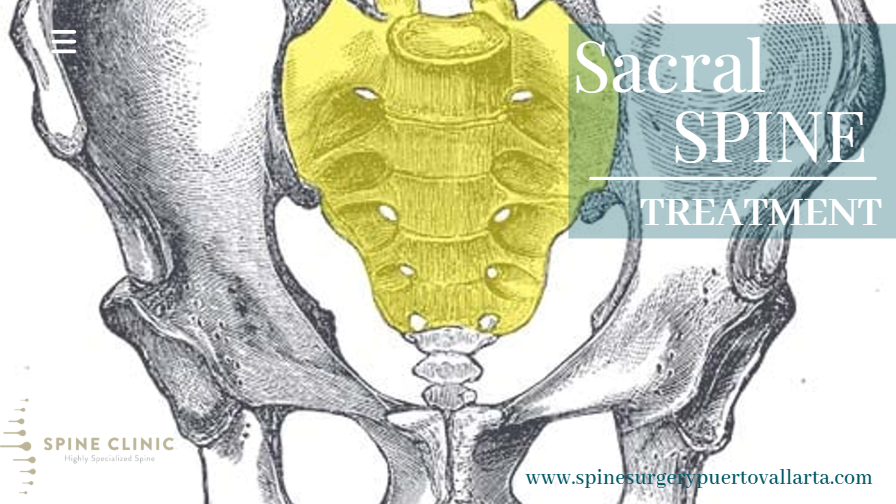
The sacral spine, like any other part of the spine, can experience various issues due to injury, degenerative conditions, or congenital abnormalities. Here are some of the most common conditions that affect the sacral spine:
Sacroiliac Joint Dysfunction: The sacroiliac joints are crucial for weight transfer and stability, but they can become inflamed or misaligned, leading to pain in the lower back, hips, and legs. Sacroiliac joint dysfunction is often mistaken for sciatica or other lumbar spine issues, but the pain originates from the sacral region.
Sacralization of the Lumbar Spine: In some people, the lowest lumbar vertebra (L5) becomes fused to the sacrum, a condition called sacralization. This can limit mobility and increase stress on other areas of the spine, leading to pain and discomfort.
Sacral Fractures: A fracture of the sacral spine can occur due to trauma, such as a fall, or in people with osteoporosis, where the bones are more prone to breaking. Sacral fractures can lead to significant pain and require rest, physical therapy, or even surgery, depending on the severity.
Spondylolisthesis: This is a condition where one vertebra slips forward over the vertebra below it. If it occurs in the sacral spine, it can cause pain, nerve compression, and difficulty with movement.
Sciatica: While sciatica is often associated with lumbar spine issues, the nerves that pass through the sacral spine can also be involved. Compression of the nerves in the sacrum can cause radiating pain down the legs, often described as a sharp or burning sensation.
Initial Treatments for Sacroiliac Joint Pain
Brief rest period.
A rest period of 1 to 2 days may be advised. Resting for longer than a couple days is not recommended, as doing so may worsen stiffness and cause increased pain and generalized deconditioning.
Applying ice or heat.
Ice applied to the low back and pelvis can reduce inflammation and alleviate pain and discomfort. Heat applied around the joint may help relieve pain by reducing muscle tension or spasms.
Pain Medication.
Over-the-counter pain relievers (such as acetaminophen) and anti-inflammatory medications (NSAIDs, such as ibuprofen or naproxen) may be recommended for mild to moderate pain relief. Prescription medications such as muscle relaxants or narcotic painkillers may be used during episodes of severe, acute pain. These medications must be used with caution, as they are highly addictive and can cause severe side effects.
Manual manipulation.
Manual manipulation provided by a chiropractor, osteopathic doctor, or other qualified health professional can be highly effective if sacroiliac joint pain is caused by too little motion (hypomobility). This therapy consists of manual procedures applied to the SI joint and lower back region with the goal of reducing joint fixation and muscle tension, and restoring normal range of motion.
Supports or braces.
When the SI joint is too loose (hypermobile), a pelvic brace can be wrapped around the waist and pulled snugly to stabilize the area. A pelvic brace is about the size of a wide belt and can be helpful when the joint is inflamed and painful.
Sacroiliac joint injections.
A local anesthetic (such as lidocaine or bupivacaine) is injected with an anti-inflammatory medication (such as a corticosteroid) to reduce inflammation and help alleviate pain. The pain relief from a joint injection can help minimize pain when starting a physical therapy program and returning to normal activity levels.
There is no single approach to managing SI joint pain that will work for everyone. A combination of non-surgical treatments is usually necessary for effective pain relief. Additionally, a period of trial-and-error may be needed to find treatments that address specific symptoms.
Physical Therapy for Sacroiliac Joint Pain.
Physical therapy to rehabilitate the sacroiliac joint typically includes:
Stretching to reduce muscle tension and spasms in the lower back, hips, and pelvis, including the piriformis, gluteus maximus, and hamstring muscles. Tension in these muscles caused by sacroiliac joint dysfunction can be the primary cause of pain.
Strengthening exercises to better support the sacroiliac joint and pelvis/lower back. Better support for the joint can come from strengthening the abdominal muscles, lateral trunk muscles, and low back muscles.
Aerobic exercise to elevate blood flow and bring nutrients and oxygen to damaged tissues, which can facilitate the healing process. Low-impact aerobics may be needed for SI joint dysfunction to minimize pain from exercise, and can include stationary cycling, running on an elliptical, or water aerobics.
Exercises for sacroiliac joint dysfunction are designed to gently return the joint to normal function and mobility, in turn reducing pain and other symptoms. Exercises may be individualized and vary from case to case